# What Happens When You Don't Replace Missing Teeth
Losing a tooth can feel like a cosmetic problem, especially if it is in the back of your mouth where nobody can see it. But a missing tooth sets off a chain of changes in your mouth that can affect your health, your comfort, and even your appearance over time.
Here is what actually happens when a gap goes unfilled, and what you can do about it.
---
Your Jawbone Starts to Shrink
This is the biggest concern most people do not know about. Your jawbone stays strong because your tooth roots stimulate it every time you chew. When a tooth is removed, that stimulation stops. The bone in that area begins to resorb (shrink) within the first year.
Studies show that patients can lose up to 25% of bone width in the first year after tooth loss, with continued loss over time. This does not just affect the empty socket. It changes the shape of your jaw and face, which is why people who have been missing teeth for years sometimes notice a sunken appearance around the mouth.
---
Your Other Teeth Start to Shift
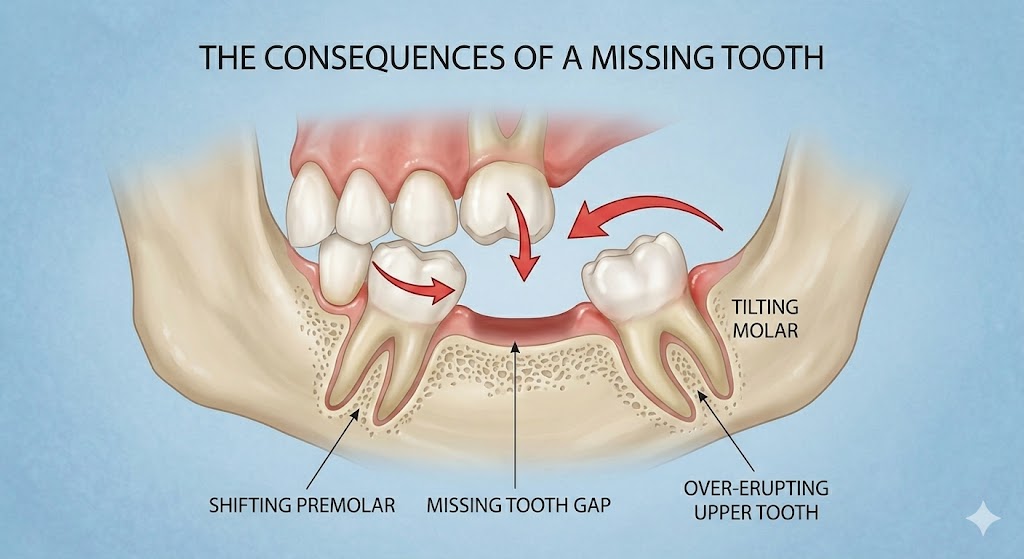
Your teeth are not fixed in concrete. They are held in place by bone, gum tissue, and the pressure of neighboring teeth. When one tooth is gone, the adjacent teeth begin to drift into the gap. Teeth on the opposite jaw can also start to over-erupt (grow into the space) because nothing is meeting them when you bite.
This shifting can happen slowly, but the effects add up:
- Crooked or crowded teeth that were once straight
- New gaps forming between other teeth
- Difficulty flossing or cleaning shifted teeth, leading to more decay
---
Your Bite Changes
When teeth shift, your bite changes. Your upper and lower teeth no longer come together the way they should. This uneven pressure can cause:
- Jaw pain or TMJ issues from compensating for the imbalance
- Uneven wear on remaining teeth, making them more vulnerable to cracks and fractures
- Difficulty chewing, which may lead you to favor one side and strain that side further
---
It Gets Harder to Eat and Speak
Even a single missing tooth can make it harder to chew certain foods. Missing multiple teeth compounds the problem. Over time, people tend to shift toward softer, less nutritious foods, which affects overall health.
Missing front teeth can also change how you pronounce certain sounds, affecting your speech and confidence.
---
Your Options for Replacing Missing Teeth
The good news is that there are several proven ways to restore your smile. The right choice depends on where the tooth was, how long it has been missing, your overall health, and your budget.
Dental Implants
Implants are the gold standard for tooth replacement. A titanium post is placed in the jawbone, where it fuses with the bone over several months. Then a custom crown is attached on top. Implants look, feel, and function like natural teeth, and they are the only option that prevents bone loss because they stimulate the jaw just like a natural root. For details on pricing and what to expect, see our dental implant cost guide.
Dental Bridges
A bridge uses the teeth on either side of the gap as anchors to support a replacement tooth (or teeth) in between. Bridges are a reliable option when the neighboring teeth are strong and healthy. They do not prevent bone loss in the gap, but they restore your bite and appearance effectively. Learn more in our dental bridges guide.
Dentures
For patients missing several or all teeth, full or partial dentures can restore function and appearance. Modern dentures are more comfortable and natural-looking than ever. For added stability, dentures can be anchored to dental implants so they do not slip or shift.
---
When Should You Act?
The sooner, the better. Bone loss begins quickly after a tooth is removed, and shifting can start within months. The longer you wait, the more complex (and costly) treatment becomes. If bone loss has already occurred, you may need a bone graft before an implant can be placed.
That said, it is never too late to explore your options. Even patients who have been missing teeth for years have solutions available to them.
---
Take the First Step
If you are living with a missing tooth (or missing teeth), we would love to talk through your options. There is no pressure and no judgment. Just an honest conversation about what makes sense for your situation.
Call East Lake Dental at (248) 437-4119 or request an appointment online.Questions About Your Dental Health?
We're here to help. Schedule an appointment or give us a call.
Request an Appointment