
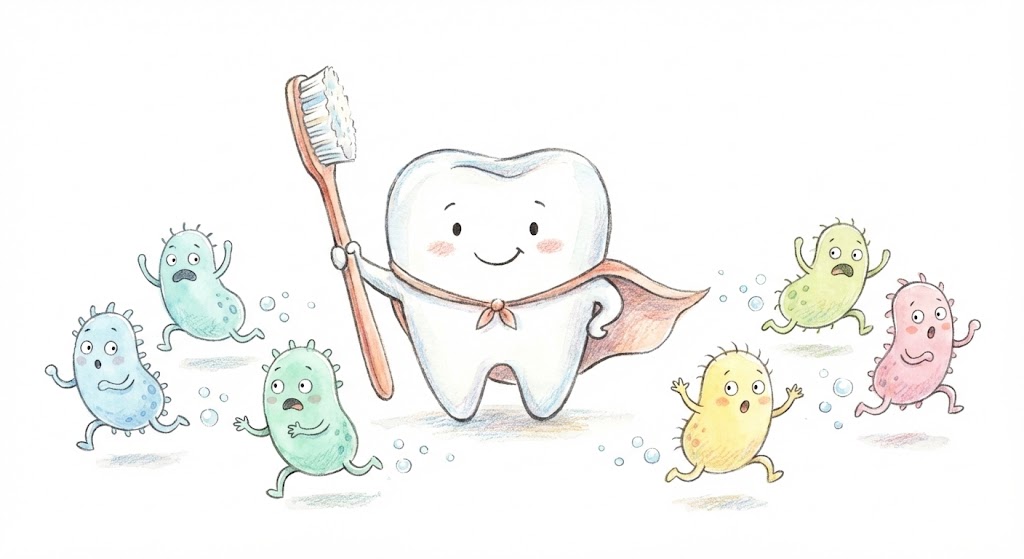
If you've ever tried to convince a four-year-old that brushing their teeth is important, you know how that conversation usually goes. Logic doesn't work. Bribery has mixed results. But there's one trick that parents and pediatric dental professionals have used for years, and it works like a charm: sugar bugs.
Sugar bugs turn the invisible, abstract idea of "germs on your teeth" into something a kid can picture, talk about, and actually want to fight. In this guide, we'll show you exactly how to use sugar bugs to teach kids to brush, build lifelong habits by age group, and make the whole routine something your family looks forward to.
What Are Sugar Bugs?
Sugar bugs are the tiny germs (bacteria) that live in everyone's mouth. They're too small to see, but they're always there, and they love to eat the sugar and food bits left on teeth after meals and snacks.
Here's what happens: when sugar bugs eat the leftover sugar on your child's teeth, they produce acid. That acid is what eats away at tooth enamel and eventually causes cavities. The more sugar bugs hang around, the more damage they do.
For kids, it helps to picture sugar bugs as tiny little critters throwing a party on their teeth. Every time they eat something sugary, it's like putting out a buffet for the bugs. And the best part? Brushing is how you kick them out. When your child brushes their teeth, they're sending those sugar bugs right down the drain where they belong.
How to Explain Sugar Bugs to Your Kids
The key to making sugar bugs work is keeping the language fun and age-appropriate. You don't need to scare your child; you just need to give them a reason to care about brushing. Here are three approaches that work well.
Make It a Story
Kids respond to narratives. Try something like this at bedtime: "After you ate that cookie, the sugar bugs snuck onto your teeth. They're having a big party in there right now, dancing around and munching on all that sugar. But guess what? When you brush your teeth, you crash their party and wash them all down the drain!"
You can make it silly, dramatic, or adventurous. Some kids love the idea of sugar bugs being "scared" of toothbrushes. Others prefer the idea that brushing is a rescue mission to save their teeth. Follow your child's lead.
Use a Visual
Let your child look at their teeth in a mirror before and after brushing. Point to where sugar bugs like to hide: the back molars (those bumpy teeth way in the back), between teeth, and right along the gumline. You can even use disclosing tablets, which temporarily stain plaque so kids can actually see where the sugar bugs are hanging out. It's a game-changer for reluctant brushers.
Make Brushing the Superhero Move
Position the toothbrush as a superpower. Your child isn't just brushing; they're a Sugar Bug Fighter. The toothbrush is their weapon, the toothpaste is their shield, and every brushing session is a victory. For kids who love superheroes, this framing turns a boring chore into the highlight of their routine.
Building Healthy Brushing Habits (By Age)
Every stage of childhood calls for a slightly different approach to brushing. Here's what to focus on at each age so you can teach kids to brush effectively and set them up for a lifetime of healthy teeth.
Ages 1-3: You're the Brusher
At this stage, parents do all the brushing. Your toddler doesn't have the coordination to do it properly, and that's completely normal. Here's what to keep in mind:
- Use a rice-grain-sized amount of fluoride toothpaste
- Choose a soft-bristled infant toothbrush with a small head
- Brush gently twice a day, especially before bed
- Make it playful: sing a short song, make funny faces, let them hold a second toothbrush to "help"
- Start talking about sugar bugs early so the concept is familiar before they're old enough to brush on their own
Ages 3-6: Supervised Brushing Begins
Around age three, kids want to start doing things themselves. Let them! But always follow up with a parent brush to make sure those back teeth get cleaned. Key tips for this age:
- Increase to a pea-sized amount of fluoride toothpaste
- Aim for two full minutes of brushing, twice a day
- Use a timer or play a two-minute song so they know how long to brush
- Teach them to spit out the toothpaste (not swallow it)
- This is a great age for sticker charts and small rewards for consistent brushing
Ages 6-9: Gaining Independence
Kids in this range are getting better at brushing on their own, but they still need supervision. Most children don't have the fine motor skills to brush thoroughly until about age eight. During this stage:
- Continue supervising to make sure they're reaching every surface
- Introduce flossing once teeth start touching (usually around age six)
- Let them pick out their own toothbrush and toothpaste flavor to build ownership
- Explain that sugar bugs hide between teeth too, which is why flossing matters
Ages 9+: Independent (With Reminders)
By now, your child can handle brushing and flossing on their own. But don't stop checking in entirely. Pre-teens and teens are notorious for rushing through their routine or skipping it altogether. Keep the conversation going:
- Talk about why oral health matters to them: braces, sports mouthguards, confidence, fresh breath
- If they're in braces, emphasize that sugar bugs love to hide around brackets and wires
- Model good habits yourself; kids still mirror what their parents do
- Transition from "sugar bugs" language to real terms like plaque and bacteria as they mature
5 Fun Ways to Make Brushing Exciting
Turning brushing from a chore into something your child actually enjoys is half the battle. Here are five ideas that parents in our practice swear by:
- Play a two-minute song. Let your child pick their favorite song and brush for the whole thing. There are also free brushing-timer apps designed for kids that play music and animations.
- Use a fun toothbrush. Character toothbrushes, light-up brushes, and electric toothbrushes with phone apps can make a huge difference. When the toothbrush itself is exciting, kids actually want to use it.
- Brush together. Kids copy what they see. If you brush your teeth at the same time, side by side in the mirror, it becomes a shared activity instead of something you're forcing them to do.
- Create a sticker chart. Give your child a sticker for every morning and night brushing session. After a full week (14 stickers), they earn a small reward. Consistency builds habits, and kids love watching their chart fill up.
- Let them pick their toothpaste flavor. Mint can be too strong for little ones. Luckily, kids' toothpastes come in strawberry, watermelon, bubblegum, and more. When they like the taste, there's a lot less resistance.
When Should Kids First Visit the Dentist?
The American Academy of Pediatric Dentistry recommends a child's first dental visit by age one or within six months of their first tooth appearing, whichever comes first. After that, regular checkups every six months help catch any issues early and keep your child comfortable with the dentist.
We know that first visit can feel like a big deal. At East Lake Dental, we take extra care to make kids feel welcome and safe. Our team is gentle and patient, we explain everything in kid-friendly language, and we even let little ones pick out fun sunglasses to wear during their visit. The goal is to build positive associations so your child doesn't grow up fearing the dentist.
If your child hasn't been to the dentist yet, or if it's been a while, read our complete guide on what to expect at your child's first dental visit.
Sugar Bugs' Favorite Foods (And Healthier Swaps)
Brushing is essential, but what your child eats plays a huge role in how active those sugar bugs are throughout the day. Here's what to watch out for.
Sugar bugs LOVE these foods:
- Candy and lollipops (especially sticky or chewy varieties)
- Juice and flavored milk
- Crackers, chips, and white bread (these break down into sugars quickly)
- Dried fruit and fruit snacks
- Gummy vitamins (yes, even the healthy-sounding ones stick to teeth)
Better choices that help fight sugar bugs:
- Cheese and plain yogurt (dairy actually helps neutralize acid)
- Crunchy raw veggies like carrots, celery, and bell peppers
- Water (the best drink for teeth, hands down)
- Nuts and seeds
- Fresh fruit (better than dried because it doesn't stick to teeth)
Here's a key tip many parents don't know: it's not just what your child eats but how often they eat it. Every time your child snacks, sugar bugs get a fresh round of fuel. Constant grazing throughout the day means the bacteria are producing acid nonstop. Instead, try to stick to defined meal and snack times, and have your child rinse with water after eating when brushing isn't possible.
Setting Your Child Up for a Lifetime of Healthy Smiles
Teaching kids to brush their teeth doesn't have to be a nightly battle. With a little creativity and the sugar bug concept in your back pocket, you can turn dental hygiene into something your child understands, takes ownership of, and maybe even enjoys.
At East Lake Dental, we've been caring for families in the South Lyon community since 1981. We love seeing kids grow up with healthy, confident smiles, and we never judge parents for where they're starting. Whether your child is overdue for their first visit or just needs a checkup, our team is here to make it a positive experience.
Looking for more tips on keeping your child's teeth healthy? Check out our guides on dental sealants for cavity prevention, 5 tips for a healthier smile, and our full list of family dental services.
We proudly serve families from South Lyon, Brighton, Milford, Novi, Northville, Pinckney, Howell, Green Oak Township, Hamburg, Whitmore Lake, Wixom, and Salem.
Time for Your Child's Checkup?
We love seeing little smiles! Schedule your child's visit today.
Schedule an Appointment