# Signs of Gum Disease and How to Prevent It
Nearly half of American adults over 30 have some form of gum disease, according to the CDC. That is roughly 64 million people. The tricky part? Most of them do not know it. Gum disease often develops slowly and painlessly, which is why regular dental visits matter so much.
At East Lake Dental in South Lyon, we screen for gum disease at every checkup. Here is what you should know about recognizing it early and keeping your gums healthy.
---
What Is Gum Disease?
Gum disease (also called periodontal disease) is an infection of the tissues that hold your teeth in place. It starts when plaque, a sticky film of bacteria, builds up along and below the gum line. If plaque is not removed through brushing, flossing, and professional cleanings, it hardens into tartar and triggers inflammation.
There are two main stages:
Gingivitis: The Early Stage
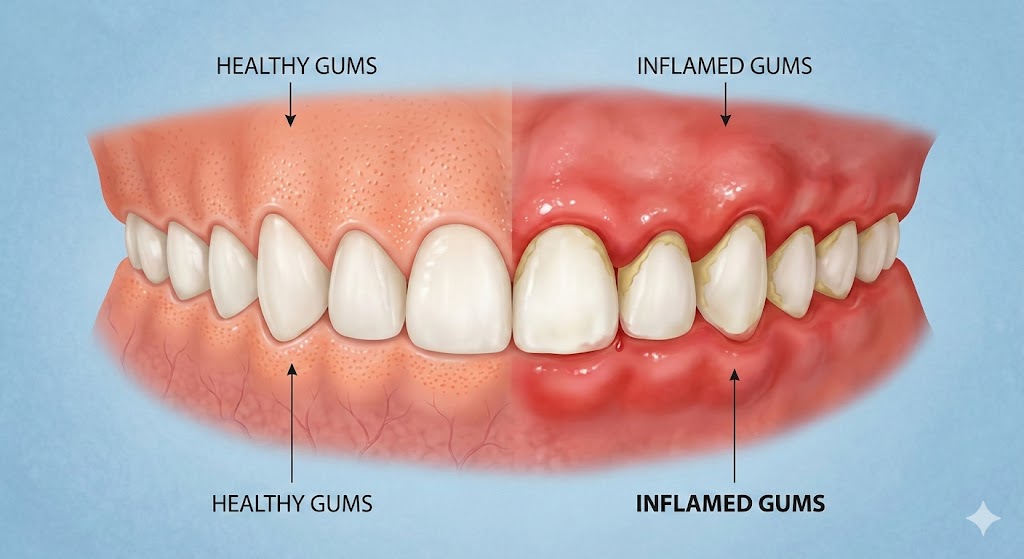
Gingivitis is the mildest form of gum disease. Your gums may be red, swollen, or bleed easily when you brush or floss. The good news is that gingivitis is completely reversible with proper care. No permanent damage has occurred at this point.
Periodontitis: The Advanced Stage
If gingivitis goes untreated, it can progress to periodontitis. At this stage, the gums begin to pull away from the teeth, forming pockets that trap bacteria. The bone and connective tissue that hold teeth in place start to break down. Without treatment, teeth can loosen and may need to be removed.
---
Warning Signs to Watch For
Many people miss the early signs because they assume healthy gums should not be a concern. Pay attention if you notice:
- Bleeding gums when brushing or flossing
- Red, swollen, or tender gums that do not improve
- Persistent bad breath that does not go away with brushing
- Receding gums (teeth that look longer than they used to)
- Loose or shifting teeth
- Pain when chewing
- Pus between teeth and gums
- Changes in your bite or how your teeth fit together
If you notice even one of these symptoms, schedule an appointment. Early detection makes treatment simpler and more effective.
---
Who Is at Higher Risk?
Certain factors increase your chances of developing gum disease:
- Smoking or tobacco use (the single biggest risk factor)
- Diabetes (reduces your body's ability to fight infection)
- Hormonal changes during pregnancy, menopause, or puberty
- Medications that reduce saliva flow
- Genetics (some people are more susceptible)
- Poor nutrition, especially vitamin C deficiency
- Stress, which weakens your immune response
---
How We Treat Gum Disease
Treatment depends on how far the disease has progressed.
For gingivitis, a professional cleaning combined with improved brushing and flossing at home is usually enough to reverse the condition. For periodontitis, we may recommend scaling and root planing. This is a deep cleaning procedure where we remove plaque and tartar from below the gum line and smooth the tooth roots so gums can reattach. Most patients respond well to this treatment, and we have a detailed guide to deep cleaning on our blog.In more advanced cases, we may refer you to a periodontist for specialized treatment, including surgical options.
---
How to Prevent Gum Disease
Prevention is straightforward, but it requires consistency:
- Brush twice a day with fluoride toothpaste for at least two minutes
- Floss daily to clean between teeth where your brush cannot reach
- Visit your dentist every six months for cleanings and checkups
- Quit smoking if you currently use tobacco
- Eat a balanced diet and limit sugary snacks
- Manage health conditions like diabetes that affect your gums
---
Do Not Wait for Pain
Gum disease rarely hurts until it reaches an advanced stage. By then, significant damage may have already occurred. The best thing you can do is stay consistent with preventive care and pay attention to the early warning signs.
At East Lake Dental, we are not here to judge your habits. We are here to work with you, wherever you are starting from, and help you get your oral health on track. For a deeper look at symptoms, stages, and treatment, visit our comprehensive gum disease guide.
Call (248) 437-4119 to schedule a checkup, or request an appointment online.Questions About Your Dental Health?
We're here to help. Schedule an appointment or give us a call.
Request an Appointment