If you're missing a tooth or facing an extraction, dental implants are the gold standard for replacement. But the first question most patients ask is simple: how much will it cost? Here's an honest, detailed breakdown of dental implant pricing in Michigan for 2026, based on what we see every day at East Lake Dental in South Lyon.
Michigan Dental Implant Prices at a Glance (2026)
Prices reflect typical ranges in the South Lyon, Oakland County, and Livingston County areas. Your actual cost depends on the complexity of your case. Call (248) 437-4119 for a personalized estimate.
Does Insurance Cover Dental Implants?
Tooth Implant Cost With Insurance
Here's the honest answer: most dental insurance plans don't fully cover implants. But that doesn't mean you're completely on your own. With insurance, most patients in Michigan end up paying somewhere between $2,000 and $5,000 out-of-pocket per implant after benefits are applied. Here's how coverage typically works:
- Dental insurance: Some plans cover a portion of the cost, typically 50% of the crown. Annual maximums (usually $1,000 to $2,000) limit how much the plan pays in a given year.
- Medical insurance: If tooth loss resulted from an accident, injury, or medical condition, your medical insurance may cover part of the implant procedure. This is worth checking with your provider.
- HSA and FSA accounts: Dental implants qualify as an eligible expense. You can use pre-tax dollars from your Health Savings Account or Flexible Spending Account to pay for implants.
At East Lake Dental, we accept most major insurance plans and will help you understand exactly what your plan covers before you commit to treatment. Our front office team can verify your benefits and provide a clear estimate of your out-of-pocket cost. The consult is at Our South Lyon office.
How Much Do Dental Implants Cost in Michigan?
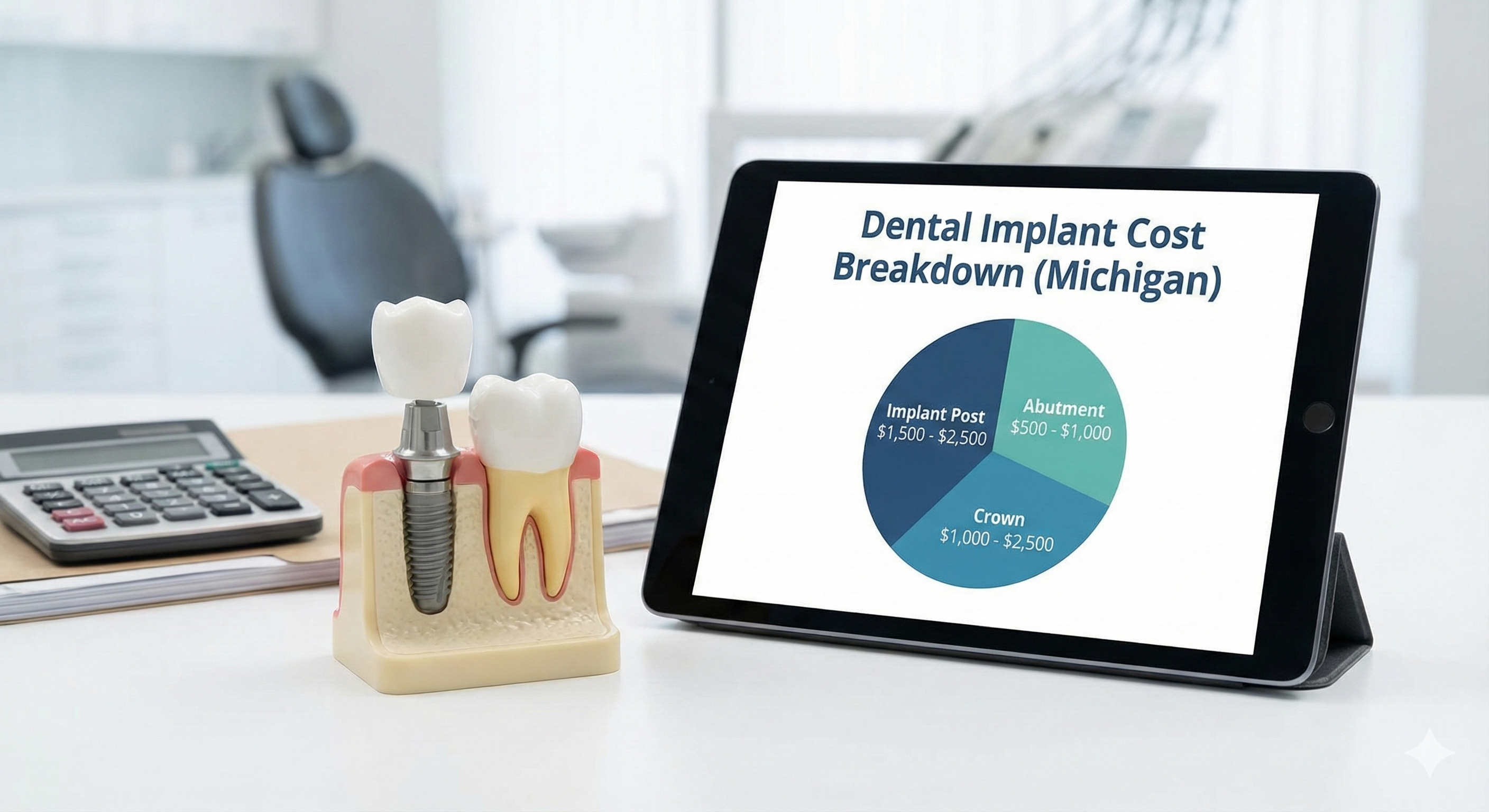
In Michigan, a single dental implant typically costs between $3,000 and $6,000 for the complete procedure. That price covers the entire process from start to finish, including the implant post, the abutment, and the final crown.
Here's what makes up that total:
- The implant post (titanium screw placed in the jawbone): $1,500 - $2,500
- The abutment (connector piece that attaches to the post): $500 - $1,000
- The crown (the visible tooth on top): $1,000 - $2,500
These prices are consistent with what patients see across Oakland County, Livingston County, and the western suburbs of Metro Detroit. South Lyon and the surrounding communities tend to be moderately priced compared to downtown Detroit or Ann Arbor, where overhead costs are higher.
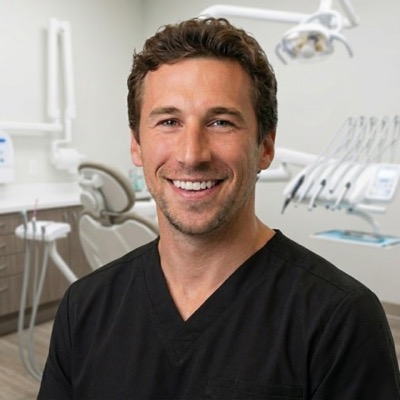
Dr. Jenkins has been placing and restoring implants at East Lake Dental since implant technology became widely available. With over 40 years of experience in general and restorative dentistry, he can give you a realistic estimate based on your specific situation during a consultation.
Dental Implant Cost Breakdown
| Procedure | Cost Range | What's Included |
|---|---|---|
| Single tooth implant | $3,000 - $6,000 | Implant post, abutment, and crown |
| Implant-supported bridge (3-4 teeth) | $6,000 - $10,000 | 2 implant posts plus bridge prosthetic |
| Bone graft (if needed) | $300 - $3,000 | Varies by graft type and area |
| Sinus lift (if needed) | $1,500 - $3,000 | Required for some upper jaw implants |
Single Tooth Implant Cost
A single tooth implant is the most common implant procedure we perform. It replaces one missing tooth with a permanent, natural-looking restoration that functions just like your original tooth.
The total cost for a single implant in Michigan ranges from $3,000 to $6,000. Where you fall in that range depends on a few factors:
- Straightforward cases (healthy bone, no grafting needed) typically come in at the lower end, around $3,000 to $4,000
- Complex cases (bone grafting required, premium crown materials, or difficult positioning) can reach $5,000 to $6,000
- Front teeth sometimes cost more because the crown needs to match your smile line precisely, requiring more detailed lab work
The procedure is done in stages over several months. First, the implant post is placed in the jawbone. Then you wait 3 to 6 months for the bone to fuse with the titanium post (a process called osseointegration). Finally, the abutment and crown are attached. Some offices offer same-day implants, but the traditional staged approach has the highest long-term success rate.
What Affects Dental Implant Pricing?
1. Number of Implants Needed
More implants mean higher costs, but you may see volume savings. For multiple missing teeth, an implant-supported bridge is often more cost-effective than placing individual implants for each tooth.
2. Bone Grafting Requirements
If you've had a tooth missing for a while, your jawbone may have deteriorated. A bone graft adds $300 to $3,000 to the total cost, depending on the type of graft and the area being treated. This step is essential for long-term implant success.
3. Implant Material
Most implants use titanium, which has a proven track record spanning decades. Ceramic (zirconia) implants are available for patients with metal sensitivities, typically at a premium price.
4. Crown Material (Dental Implant Crown Cost)
The visible crown can be porcelain, porcelain-fused-to-metal, or zirconia. All-porcelain tends to cost more but looks the most natural, especially for front teeth. The crown itself typically accounts for $1,000 to $3,000 of the total implant cost, depending on the material chosen. For a full breakdown of crown pricing on its own (including non-implant crowns), see our Michigan dental crown cost guide.
5. Geographic Location
Dental implant costs vary across Michigan. South Lyon and the surrounding Oakland County area tend to be moderately priced compared to downtown Detroit or Ann Arbor, where practice overhead is higher. Rural areas may be slightly less expensive, but access to experienced implant providers can be more limited.
6. Dentist Experience
An experienced dentist who has placed hundreds or thousands of implants may charge more, but the success rate and long-term outcome are typically better. Dr. Jenkins has been practicing as a dentist in South Lyon since 1981, and implant dentistry has been a core part of his practice for decades.
How to Make Dental Implants More Affordable
Tooth Implant Cost Without Insurance
If you don't have dental insurance, expect to pay the full $3,000 to $6,000 per implant at most Michigan practices. The good news: implants are an investment, and there are several legitimate ways patients without insurance manage the cost without compromising on quality.
- HSA/FSA funds: Pre-tax dollars from your health savings or flexible spending account can be applied toward the cost of implants.
- Phased treatment: If you need multiple implants, you can spread the work across several months or even a couple of years. Complete one implant, let the area heal, then start the next.
- Insurance maximization: If your dental plan has a $1,500 annual maximum, you can time your treatment across two plan years to use two years of benefits.
- Tax deductions: Dental implants may qualify as a medical expense deduction on your federal taxes if your total medical expenses exceed 7.5% of your adjusted gross income.
We never want cost to prevent someone from getting the care they need. If you're interested in implants but concerned about affordability, come in for a consultation and we'll walk through every option together.
Are Dental Implants Worth the Cost?
When comparing dental implants to alternatives, the long-term value becomes clear. Here's how the numbers break down over time:
| Option | Initial Cost | Lifespan | 10-Year Cost | Key Tradeoffs |
|---|---|---|---|---|
| Dental Implant | $3,000-$6,000 | 25+ years | $3,000-$6,000 | Permanent, preserves bone, no diet restrictions |
| Dental Bridge | $2,000-$5,000 | 5-15 years | $4,000-$10,000 | Requires grinding down adjacent healthy teeth |
| Partial Denture | $300-$1,500 | 5-7 years | $600-$3,000 | Removable, can be uncomfortable, accelerates bone loss |
| Full Dentures | $1,000-$3,000 | 5-10 years | $2,000-$6,000 | Removable, adhesives needed, 50-75% bite force reduction |
Implants also preserve jawbone health, don't require altering adjacent teeth, and function just like natural teeth. For most patients, the higher upfront cost pays for itself within 10 to 15 years because you avoid the cycle of replacing bridges or dentures every few years.
Dental Implants vs. Alternatives
Every tooth replacement option has its place. Here's a more detailed look at how implants compare:
Implants vs. Bridges
A traditional bridge requires your dentist to grind down the two teeth on either side of the gap to anchor the bridge. Those healthy teeth are permanently altered. An implant stands on its own without affecting neighboring teeth. Bridges also don't prevent bone loss in the area where the tooth is missing, while implants do.
Implants vs. Dentures
Dentures sit on top of the gums and are held in place by suction or adhesive. They can slip, make clicking sounds, and limit what you can eat comfortably. Over time, the jawbone shrinks underneath dentures, changing the fit and requiring relining or replacement. Implants (or implant-supported dentures) eliminate all of these issues.
Implants vs. Doing Nothing
Leaving a gap where a tooth was may seem like the cheapest option, but it leads to problems over time. Adjacent teeth shift into the space, your bite changes, and the jawbone deteriorates. These issues can lead to more expensive dental work down the road. In many cases, placing an implant early prevents bigger problems later.
Frequently Asked Questions About Dental Implant Costs
How much does a single dental implant cost in Michigan?
A single dental implant in Michigan typically costs between $3,000 and $6,000 for the complete procedure. This includes the titanium implant post ($1,500-$2,500), the abutment connector ($500-$1,000), and the custom crown ($1,000-$2,500). Costs vary based on your specific needs, materials chosen, and whether bone grafting is required.
Does insurance cover dental implants?
Most dental insurance plans do not fully cover implants, but many cover a portion of the cost. Some plans cover 50% of the crown, and medical insurance may cover implants if tooth loss resulted from an injury or medical condition. HSA and FSA funds can also be applied toward implant costs. Our team can help verify your specific benefits before treatment begins.
How much is a dental implant with insurance?
Most dental insurance plans do not fully cover implants. With insurance, most patients in Michigan end up paying about $2,000 to $5,000 out-of-pocket per tooth after benefits are applied. We verify your benefits before you commit to treatment.
Are dental implants worth the cost?
For most patients, yes. Dental implants last 25 years or more with proper care, while bridges last 5-15 years and dentures 5-7 years. Over a decade, implants often cost less than alternatives that need repeated replacement. Beyond the financial comparison, implants preserve jawbone health, feel like natural teeth, and allow you to eat anything without restrictions.
How can I afford dental implants without insurance?
Without insurance you pay the full cost, but a few things help: HSA or FSA pre-tax dollars, phased treatment spread over several months, and timing care across two calendar years to use two years of insurance benefits. We give you a clear written estimate up front and review it with you before any treatment.
Schedule Your Implant Consultation in South Lyon
The best way to get an accurate cost estimate is to come in for a consultation. Dr. Jenkins will examine your mouth, take X-rays, and create a personalized treatment plan with clear pricing. There are no surprises and no pressure.
During your consultation, we'll:
- Examine your mouth and take digital X-rays
- Assess your bone health and determine if grafting is needed
- Discuss your options and recommend the best approach for your situation
- Provide a detailed, written cost estimate
- Review your insurance benefits and what your plan covers
Many patients are surprised to find implants are more affordable than they expected, especially when considering the long-term value.
We serve patients from South Lyon, Brighton, Milford, Pinckney, Howell, Green Oak Township, Hamburg, Whitmore Lake, Wixom, Salem, Northville, and Novi.
Ready to Learn More About Dental Implants?
Schedule a consultation to get a personalized cost estimate and treatment plan. Call (248) 437-4119 or request an appointment online.
Request an Appointment